
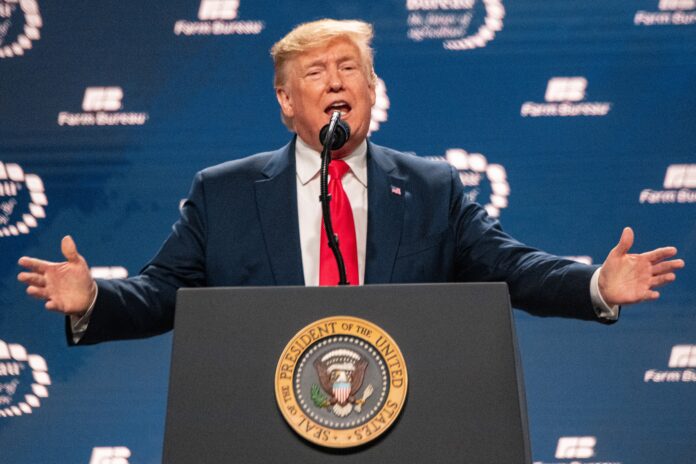
President Donald Trump, 78, completed the first year of his current term in January 2026 facing mounting scrutiny over the scope and consequences of his early policy decisions.
While the White House pointed to rapid action on government restructuring, immigration enforcement, and tax reform goals, critics argued the administration’s first year was marked by economic strain, reduced oversight, and uncertainty.
Trump returned to office in 2025 promising to shrink the federal government, secure the border, and overhaul what he called an inefficient tax system. He moved quickly through executive action, often bypassing Congress as lawmakers remained closely divided. Voting through the year showed Americans sharply split, causing a lot of political drama. With approval strongest amongst Republicans and lowest among Democrats, and mixed among independents.
The administration highlighted the creation of the Department of Government Efficiency, or DOGE, as a central accomplishment. The initiative aimed to reduce waste and reorganize agencies. Officials said the effort addressed long-standing voter frustration with bureaucracy and federal spending.
“Presidents from both parties have talked about efficiency, and this administration acted on it immediately,” said Kathrine Owens, a nonpartisan public administration analyst.
However, the restructuring generated controversy. Career federal employees were temporarily locked out of internal systems during reviews, and watchdog groups raised questions and concerns about transparency. Trump also dismissed 17 inspectors general responsible for oversight across federal agencies, prompting concern from both parties.
“Inspectors general exist to catch waste and abuse before it grows,” said Danielle Harper, a government ethics researcher. “Removing that layer of oversight creates risk.”
Trump also expanded immigration enforcement during his first year, loosening restrictions on Immigration and Customs Enforcement operations and increasing deportations. Supporters said the policy restored order at the border and enforced existing law. Independent budget analyses estimate large-scale deportation effects could cost tens of billions of dollars annually.
“Border enforcement is expensive, but supporters see it as necessary,” said Mark Ellis, a former congressional budget adviser.
Critics countered that the administration’s approach strained resources and raised legal and humanitarian concerns. New policies allowed detention based on arrest rather than conviction and removed limits on ICE arrests in schools, hospitals, and churches. This policy has been designed to catch “criminal aliens” who might otherwise hide in these locations according to DHS statements. However, this has caused significant fear among immigrant and non immigrant communities. Civil rights groups warned the changes could lead to wrongful detention and labor shortages in agriculture and construction.
Economic policy proved to be one of the administration’s most contested areas. The White House said the tariffs pressured foreign governments over fentanyl trafficking and immigration. Based on early 2025 actions, the White House initiated tariffs, specifically 25% on Canada and Mexico and 10% on China. It’s used as a tool to pressure these governments to take stronger action against the flow of illegal drugs, particularly fentanyl, and illegal immigration. But economists said the tariffs also raised prices for U.S. consumers on gasoline, food, and manufactured goods.
Federal data showed tariff revenue totaled about $77 billion in 2024, far below the $2.6 trillion collected in individual income taxes in 2023. Trump had previously suggested tariffs could replace income taxes, a claim analysts widely disputed.
“Tariffs can generate revenue, but not at the scale needed to fund the federal government,” said Linda Chavez, an international trade economist.
Trump also renewed calls for tax cuts and changes to the Internal Revenue Service, freezing parts of the agency’s budget and slowing hiring. Experts warned reduced enforcement capacity could shift the audits toward middle and lower income taxpayers while limiting scrutiny of wealthy filers.
Further criticism followed proposals to weaken or eliminate the Consumer Financial Protection Organization, which has returned $19.6 billion to consumers through enforcement actions. Opponents argued dismantling the agency could leave consumers vulnerable to predatory practices.
Spending freezes early in the term also drew backlash after funding delays affected veterans suicide prevention programs, school lunch initiatives, and wildfire response planning. Some state officials said that the pauses disrupted essential services, particularly in states reliant on federal support.
As Trump enters the second year of his term, analysts say his presidency remains defined by rapid action and deep division. Supporters view his first year as a fulfillment of campaign promises, while critics argue the costs and consequences of those policies have yet to be fully felt. How voters ultimately judge Trump’s return to office may depend on economic conditions, court challenges, and solely their own opinion. The best way to do your part, is to educate yourself and vote to make the change you want.